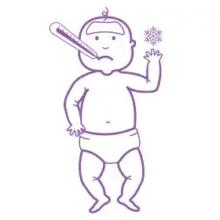
Symptoms of meningitis are similar to the flu, but advance quickly and require early diagnosis and treatment.
Know the symptoms and don’t wait for a rash to appear.
Meningitis can kill in hours
Someone with meningitis will become very ill. The illness may progress over one or two days, but it can also develop very quickly, sometimes in a matter of hours.
Most cases of meningitis start with a high fever, severe headache and stiff neck (however a stiff neck is an uncommon symptom in young children). Vomiting and drowsiness often follow. The person may complain of discomfort when looking at bright lights. In some cases a rash may appear. If you suspect meningitis, seek urgent medical attention.
Experiencing convulsive fits or seizures is characteristic of meningitis. Check for any of the other symptoms of meningitis.
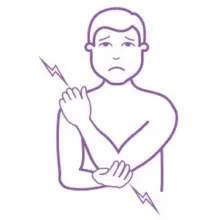
Joint Pain
Aching sore joints are a symptom of meningitis. If the person is experiencing pain in their joints check for any of the other symptoms of meningitis.
Drownsiness or Confusion
If the child or adult is difficult to wake, or in a drowsy and confused state, they could be exhibiting early symptoms of meningitis.
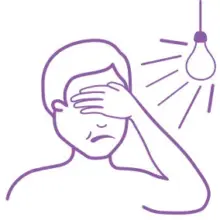
Light Sensitivity
A sensitivity to light, or a dislike of bright lights is an early warning sign of meningitis. If this symptom is present, check for any of the other symptoms of meningitis.
Vomiting
Vomiting is a common symptom of meningitis in both children and adults.
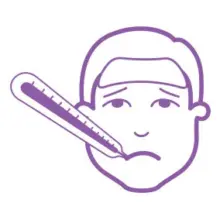
Fever
A fever, sometimes accompanied by cold hands and feet, can be a symptom of meningitis.
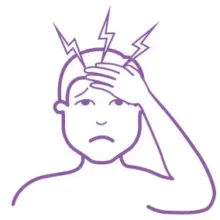
HEADACHE
If you or your child has a severe headache, check for any of the other symptoms of meningitis.
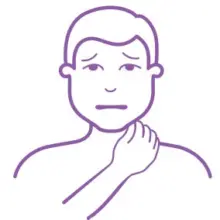
STIFF NECK
A stiff, sore neck can be a symptom of meningitis.
If you see a rash, use the ‘glass test’. Most importantly, trust your instincts. If you suspect meningitis, seek urgent medical attention – Call 111, see your doctor, or go to a hospital.
A rash may occur with some forms of meningitis. You can test whether a rash is caused by meningococcal bacteria, by pressing a glass against it. If you can still see the rash through the glass, there’s a high chance that it’s a meningococcal rash.
Remember – Not everyone who gets meningitis has a rash. It’s an important symptom, but don’t delay seeking medical help just because someone doesn’t have a rash.
Don’t hesitate to return to the doctor or hospital immediately if the person deteriorates or you are still concerned.
symptoms of meningitis in babies & infants
Pale, blotchy complexion
Pale, blotchy skin, with spots or a rash can be a symptom of meningitis. You can test if a rash is caused by meningococcal bacteria by pressing a glass against it. Don’t wait for a rash to appear as not everyone gets a rash.
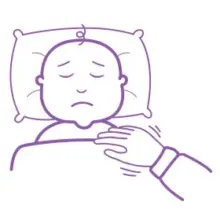
Child is difficult to wake, lethargic
If it is difficult to wake your baby or he/she is drowsy, floppy and unresponsive to you, these could be symptoms of meningitis.
Blank & staring expression
If your baby is showing a blank and staring expression and not responding to you as he/she normally does, this could be a symptom of meningitis.
Neck retraction with arching of back
A baby who is drawing their neck back and arching their back, and/or has a bulging fontanel (the soft spot on the top of your baby’s head), is showing strong signs of meningitis.
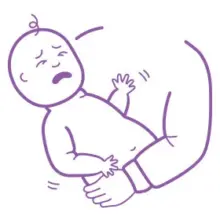
Dislike of being handled or fretful
A fretful and irritable baby who does not like being handled could be showing symptoms of meningitis.
High pitched moaning cry or whimpering
If your baby has a high pitched moaning cry, or is continuously whimpering, check for any of the other symptoms of meningitis.
Refusing feeds or vomiting
If your baby is refusing feeds (and this is unusual) and/or vomiting, check for any of the other symptoms of meningitis.
Fever, possibly with cold hands and feet
Fever is a common symptom of meningitis in babies and infants - Your baby may also have cold hands and feet.
Important things to know about a baby with a pale, blotchy complexion.
Pale, blotchy skin, with spots or a rash can be a symptom of meningitis. If your baby’s skin is dark it may be harder to check, so you will need to look at areas of skin that are lightest (e.g. eyelids and the palms of the hand). You can test if a rash is caused by meningococcal bacteria by pressing a glass against it. If you can still see the rash through the glass, there’s a high chance that it’s a meningococcal rash. Don’t wait for a rash to appear though as not everyone gets a rash.
SEPTICAEMIA SYMPTOMS
Septicaemia Symptoms
The bacteria which cause meningitis can also cause septicaemia (blood poisoning). The symptoms are similar to meningitis and can kill within 24 hours. Know the symptoms and act quickly if you are concerned.
babies and Infants
Symptoms can occur in any order, and may not all be present:
Fever (possibly with cold hands and feet)
Dislike of being handled or fretful
Vomiting or refusing feeds
Child is difficult to wake or lethargic
Breathing problems or rapid breathing
Diarrhoea
Pale blotchy complexion
Rash*
Floppy or stiff body or jerking movements
Blank staring expression
High pitched moaning cry or whimpering
Children and Adults
Symptoms can occur in any order, and may not all be present:
AMOEBIC MENINGITIS
Fever (possibly with cold hands and feet)
Nausea or vomiting
Behaviour changes (ie. irritable or restless)
Drowsiness/reduced consciousness/lethargy (however many people may be alert until late in the development of the disease)
Pain in legs and arms
Pain in abdomen or chest
Unusual skin colour or pale complexion
Breathing problems or rapid breathing
Sore muscles or joints
Confusion
Chills
Diarrhoea
Rash*
*The rash can start anywhere on the body and can vary in appearance. In some cases it may start as a pink rash, or a pink, purple or red spot. It may also appear as pink, red, purple or brownish pin-prick spots which may develop into a bruise like rash. The rash is due to septicaemia (blood poisoning) and is caused by bleeding into the skin. The rash should be taken seriously. Seek urgent medical attention.
If you believe someone is seriously ill, do not wait for a rash to appear as it may not appear in all cases. Seek urgent medical attention.
Trust your instincts – If concerned, see a doctor immediately!